
What is a record?
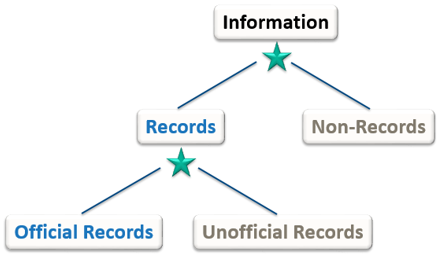
A record is information created, received, and maintained as evidence and information by an organization or person, in compliance with legal requirements or in the transaction of business.
Records are categorized as Official or Unofficial, which are defined on the next slide.
Non-Records are not business records of the Company and should be destroyed as soon as they are no longer needed.
| Records | Non-records |
|
Information created, received, and maintained as evidence in pursuance of legal obligations, in the transaction of business, or to support a business decision. Records can be:
|
|
Official vs. Unofficial Records
Official Records:
- Complete and final records containing information required to be retained for business, including legal reasons
- Commit Company or an individual to an action
- Document a transaction, decision, or operations
- Evidence of a legal obligation
Unofficial Records:
- Evidence of a business transaction but are not required to be kept because they are:
- Duplicates of Official Records
- Drafts of Official Records
- Drafts of reports that were not circulated and do not constitute a business action
Active vs. Inactive Records
Active Records:
- Information related to current or in-process activities
- Open Invoices
- Current/open contracts
- Personnel files for active employees
Inactive Records:
- Records related to closed, completed, or concluded activities:
- Paid Invoices
- Expired/Terminated Contracts
- Terminated personnel files
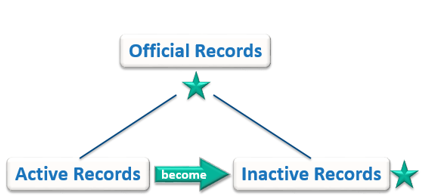
For inactive records:
| Action | Action |
|
|
Media and Records Ownership
The company owns all records created, received and/or used in the course of conducting or supporting its business. All records pertaining to Company business, no matter where they are located, are considered Company property.
Records status is separate from format.
Examples of record media include:
- Paper
- Electronic Records
- Microfilm/Microfiche
- Photographs
- Video
Comments
0 comments
Article is closed for comments.